We meet again, old vague acquaintance.
I never did get the hang of you last time.
Your entry into the White House was sudden, unexpected, tragic. It was inevitable for you to end up in Jack's shadow. History didn't change that.
Your domestic experience gave you no credit among students of diplomatic history. Whatever foreign policy you led, we usually accounted to your predecessor's memory. Besides, your foreign policy = Vietnam.
You are little more than a footnote in books about U.S. policy in the Middle East, and he only thing really worth mentioning is your strong support for the State of Israel (but then this isn't exactly unique among American presidents).
You are said to be one of the main inspirations behind Kevin Spacey's character in "House of Cards" (along with King Richard III of England). Good for you.
Your name. Lyndon! It sounds like a character from a 1950s superhero comic (though no the hero. Not the villain either, I think. The jury is still out). The only U.S. politician sounding more like a superhero comic character is Spiro Agnew. You can't beat that.
You did leave a legacy in domestic politics. But I don't study domestic politics.
You're from Texas. Which called for another footnote in the books about U.S. policy in the Middle East, as you were already accustomed to deal with oil companies. So no need to mention that part of your foreign policy either.
Your wife is called Lady Bird. That is all.
You share initials with your wife (and your daughters, and your dog), though I think it would be much more entertaining if you also shared her middle name. Lyndon Bird Johnson makes you sound even more like a character from a superhero comic (though still not the hero).
We were never friends. I don't think that will change this time either. But perhaps I might get to know you a little better, at least?
I am not sure how I feel about that.
Showing posts with label politics. Show all posts
Showing posts with label politics. Show all posts
Tuesday, May 20, 2014


Monday, January 9, 2012
On Manhattan
I wish I was on Manhattan.

Not just because Norway is exceptionally cold and snowy today, and a vacation would be just what I need at the moment...
Imagine walking down the streets of Manhattan, running into Carrie and Mr. Big. Or maybe you can drop in on some old friends in "Central Perk". Or the more physical Central Park.
There is something about Manhattan - how it is portrayed in popular culture - that paints such an interesting and amazing picture (like the one above). The rest of New York has its merits too, I'm sure, but Manhattan? The home of the rich and beautiful and cool and successful? Who wouldn't dream of going there?
Why, then, did they have to ruin this picture-perfect place with taking its name for one of the biggest atrocities in human history? I am reading up on "The Manhattan Project", and I don't much like what I'm reading. Military-industrial complexes, Big Science, world politics, a quick end to an already too long war - I still can't wrap my mind around the fact that people were willing to develop and construct a weapon that spread into two separate bombs killed 150,000-250,000 - about half of them immediately, and the rest within the next few months. Not to mention the after effects from the radiation. Add to that how nuclear weapons held the world hostage during the next fifty years, and how it is still considered one of the worst threats should it fall into the wrong hands. (Or, as I'm prone to believe - all hands are wrong when it comes to nukes. The question is whether those hands will pull the trigger.)
I know. What a turn this post took. I'm complicated that way.

Not just because Norway is exceptionally cold and snowy today, and a vacation would be just what I need at the moment...
Imagine walking down the streets of Manhattan, running into Carrie and Mr. Big. Or maybe you can drop in on some old friends in "Central Perk". Or the more physical Central Park.
There is something about Manhattan - how it is portrayed in popular culture - that paints such an interesting and amazing picture (like the one above). The rest of New York has its merits too, I'm sure, but Manhattan? The home of the rich and beautiful and cool and successful? Who wouldn't dream of going there?
Why, then, did they have to ruin this picture-perfect place with taking its name for one of the biggest atrocities in human history? I am reading up on "The Manhattan Project", and I don't much like what I'm reading. Military-industrial complexes, Big Science, world politics, a quick end to an already too long war - I still can't wrap my mind around the fact that people were willing to develop and construct a weapon that spread into two separate bombs killed 150,000-250,000 - about half of them immediately, and the rest within the next few months. Not to mention the after effects from the radiation. Add to that how nuclear weapons held the world hostage during the next fifty years, and how it is still considered one of the worst threats should it fall into the wrong hands. (Or, as I'm prone to believe - all hands are wrong when it comes to nukes. The question is whether those hands will pull the trigger.)
I know. What a turn this post took. I'm complicated that way.
Thursday, October 13, 2011
On fashionable affairs
Last week the Norwegian government presented the National Budget for 2012 (that's right - we don't believe in Mayan predictions here). It wasn't exactly a thriller - a budget presented by a majority government that has been sitting for six years, in a country where the economy is reasonably healthy and stable, the unemployment is low, while the rest of the world seems headed into a new financial crisis. Hardly the time to make dramatic changes. No one were overly excited.
That being said, it's still our National Budget, and regardless of how small the changes may be, there are some changes, and they will impact our daily lives. Thus, I found it slightly disturbing that what the media seemed to focus on was not the numbers in the budget, but rather, this man:
This is Mr. Sigbjørn Johnsen, our Minister of Finance. An esteemed politician, long-term member of Parliament, several-time Minister, former County Governor of Hedmark, the list goes on. He is famous in Norway for having such a jovial dialect and charisma that even when he says scary stuff like "the world economy is going to crash" or "we don't have any more money", it sounds okay. Nice, even.
He's an important guy, and definitely worth the attention of the media on the day of the National Budget presentations. That is hardly what bothered me. What made me question the priorities of our media was what they focused on about this guy. His outfit.
Take another look at that picture. The man wears a hat, and a long coat. "Norway's Don Draper!" the headlines read. Uhm, right. Look, I like the guy, I really do. But Sigbjørn is no Don Draper.
Later the same day, another newspaper - in the economy section no less - reported that not only was Mr. Johnsen the king of hats, he also knew how to ensure variety in his ties!

By changing ties throughout the day, he managed to look serious for the speeches, but quirky and fun for the interviews. What he actually said in these speeches or interviews, didn't seem to matter all that much for the newspaper.
I considered writing angry letters to the papers in question, or at the very least post a semi-annoyed Facebook status about it, but then I realized something. While these papers were clearly reporting about something far less significant than the National Budget they should be concerned about, they were also doing something not-so-insignificant: they were commenting on a man's fashion choices.
Female politicians are constantly badgered for what they are wearing, and why. They have to suffer through "the fashion police" commenting on their outfits in glossy magazines. If they wear the same dress twice, you can be certain the media will notice, and report. While we might not like that either, we don't think much of it. Because they are women, we accept it. Now that it was a man, I reacted.
So, instead of being annoyed, I decided that it was about time the media started caring what men wear. I'll be the first to applaud when they also start asking the Prime Minister where he bought his suit, or why the Foreign Minister is wearing the same tie two events in a row.
That being said, it's still our National Budget, and regardless of how small the changes may be, there are some changes, and they will impact our daily lives. Thus, I found it slightly disturbing that what the media seemed to focus on was not the numbers in the budget, but rather, this man:
 |
| Actually, this pic is from last year. He wore a hat this year too, though |
He's an important guy, and definitely worth the attention of the media on the day of the National Budget presentations. That is hardly what bothered me. What made me question the priorities of our media was what they focused on about this guy. His outfit.
Take another look at that picture. The man wears a hat, and a long coat. "Norway's Don Draper!" the headlines read. Uhm, right. Look, I like the guy, I really do. But Sigbjørn is no Don Draper.
Later the same day, another newspaper - in the economy section no less - reported that not only was Mr. Johnsen the king of hats, he also knew how to ensure variety in his ties!

By changing ties throughout the day, he managed to look serious for the speeches, but quirky and fun for the interviews. What he actually said in these speeches or interviews, didn't seem to matter all that much for the newspaper.
I considered writing angry letters to the papers in question, or at the very least post a semi-annoyed Facebook status about it, but then I realized something. While these papers were clearly reporting about something far less significant than the National Budget they should be concerned about, they were also doing something not-so-insignificant: they were commenting on a man's fashion choices.
Female politicians are constantly badgered for what they are wearing, and why. They have to suffer through "the fashion police" commenting on their outfits in glossy magazines. If they wear the same dress twice, you can be certain the media will notice, and report. While we might not like that either, we don't think much of it. Because they are women, we accept it. Now that it was a man, I reacted.
So, instead of being annoyed, I decided that it was about time the media started caring what men wear. I'll be the first to applaud when they also start asking the Prime Minister where he bought his suit, or why the Foreign Minister is wearing the same tie two events in a row.
Tuesday, July 26, 2011
This is Norway
The past few days I have seen the worst and the best of mankind.
It started with the worst. With terrorism, hate, fear.
But it quickly turned around, into a show of strength far superior to that of one individual's hatred. It was the will of an entire people - and with us an entire world - who chose love, solidarity, democracy to battle terrorism.
"We meet terror and violence with more democracy and will continue to fight against intolerance," our Prime Minister said. And the people replied. By organizing hundreds of events in support of the victims. By speaking out in public, or by use of social platforms like Twitter and Facebook. By standing together, in rain and sunshine throughout the weekend, in Oslo and around the country (and also abroad). The sea of roses in front of one of Oslo's churches grew from a few hundred to thousands and thousands in the course of a few days. And then the rose march yesterday - taking place simultaneously in Oslo and the rest of the country. We're a small country, of only 4,6 million people. About 1 million of us were out marching with roses or candles yesterday. Even though we're not many, though, even though we're small; we're also big. Together we are more than 1 million roses, more than 4,6 million people. We're a nation coming together in a time of grief.
Another inspiring quote that has circulated these past few days is from one of the young politicians who was at the Utøya camp on Friday: "If one man can show so much hate, imagine how much love we could show, standing together."
This is exactly what we are now doing.
Matching our solidarity and love, however, must also be what our Prime Minister called for: democracy.
According to our laws, the maximum punishment the culprit from Friday's terror actions can get is 21 years (though there is the possibility of charging him with "crimes against humanity", which might make him eligible for a total of 30 years). In addition, these are not calendar years, but "prison years". Which means that in theory, he could be out of jail after 16 years.
16 years does not seem much considering the many lives lost. 16 years does not do justice to the loss of these young lives, the dreams and hopes. But then again - what would? Prison for life? Capital punishment? Public lynching?
Of course not. Nothing will ever do this justice. The best we can do is to make sure that the terrorist's intention will not prevail. He attacked our democracy. Our democracy will fight back.
So it is important to me to answer to what I've seen of international (and national) skepticism with regards to the "mild" sentence. Yes, it is mild. 16 years in a comfortable Norwegian prison is not much. But it is what we have at hand, determined as we are to not let him win by changing us.
In addition, even if his official punishment ends at 21 years, his time locked up will not. We have a system in Norway called "forvaring" (involuntary commitment), reserved for criminals who are considered a particular danger to society. There is no doubt that he will end up there, probably for the rest of his life.
It's still not justice. But neither would changing our society and somehow find it in us to execute him. It would not help. It would not bring back those who died. And if we did, then it really would be appropriate to consider this a "loss of innocence".
I trust my country and the people ruling it. I have faith in our ability to get past this without changing for the worse. As many have pointed out - this will change Norway. But it is us - not him - who decide how.
Finally, some impressions from the rose march, which wasn't a march after all, since 200 000 people showed up in Oslo. It was simply impossible to logistically organize it, so we stayed put in front of the city hall. Here there were speeches from Prime Minister Stoltenberg, Crown Prince Haakon, the leader of the Labour Party Youth Organization, and several others. There was music, togetherness, and roses. Roses everywhere. Every few minutes someone raised their rose to the sky, and this triggered a wave of roses all over the crowd. It was stunning to see what resembled a meadow of flowers growing from the hands of the people. And it was impossible to fight back the tears when the crowd spontaneously erupted into song.
This memory will be with me for life. I can only share with you the pictures.
That is how much love we can show each other, standing together. OsLove <3
maria mena "Mitt Lille Land" by maria mena
It started with the worst. With terrorism, hate, fear.
But it quickly turned around, into a show of strength far superior to that of one individual's hatred. It was the will of an entire people - and with us an entire world - who chose love, solidarity, democracy to battle terrorism.
"We meet terror and violence with more democracy and will continue to fight against intolerance," our Prime Minister said. And the people replied. By organizing hundreds of events in support of the victims. By speaking out in public, or by use of social platforms like Twitter and Facebook. By standing together, in rain and sunshine throughout the weekend, in Oslo and around the country (and also abroad). The sea of roses in front of one of Oslo's churches grew from a few hundred to thousands and thousands in the course of a few days. And then the rose march yesterday - taking place simultaneously in Oslo and the rest of the country. We're a small country, of only 4,6 million people. About 1 million of us were out marching with roses or candles yesterday. Even though we're not many, though, even though we're small; we're also big. Together we are more than 1 million roses, more than 4,6 million people. We're a nation coming together in a time of grief.
Another inspiring quote that has circulated these past few days is from one of the young politicians who was at the Utøya camp on Friday: "If one man can show so much hate, imagine how much love we could show, standing together."
This is exactly what we are now doing.
Matching our solidarity and love, however, must also be what our Prime Minister called for: democracy.
According to our laws, the maximum punishment the culprit from Friday's terror actions can get is 21 years (though there is the possibility of charging him with "crimes against humanity", which might make him eligible for a total of 30 years). In addition, these are not calendar years, but "prison years". Which means that in theory, he could be out of jail after 16 years.
16 years does not seem much considering the many lives lost. 16 years does not do justice to the loss of these young lives, the dreams and hopes. But then again - what would? Prison for life? Capital punishment? Public lynching?
Of course not. Nothing will ever do this justice. The best we can do is to make sure that the terrorist's intention will not prevail. He attacked our democracy. Our democracy will fight back.
So it is important to me to answer to what I've seen of international (and national) skepticism with regards to the "mild" sentence. Yes, it is mild. 16 years in a comfortable Norwegian prison is not much. But it is what we have at hand, determined as we are to not let him win by changing us.
In addition, even if his official punishment ends at 21 years, his time locked up will not. We have a system in Norway called "forvaring" (involuntary commitment), reserved for criminals who are considered a particular danger to society. There is no doubt that he will end up there, probably for the rest of his life.
It's still not justice. But neither would changing our society and somehow find it in us to execute him. It would not help. It would not bring back those who died. And if we did, then it really would be appropriate to consider this a "loss of innocence".
I trust my country and the people ruling it. I have faith in our ability to get past this without changing for the worse. As many have pointed out - this will change Norway. But it is us - not him - who decide how.
Finally, some impressions from the rose march, which wasn't a march after all, since 200 000 people showed up in Oslo. It was simply impossible to logistically organize it, so we stayed put in front of the city hall. Here there were speeches from Prime Minister Stoltenberg, Crown Prince Haakon, the leader of the Labour Party Youth Organization, and several others. There was music, togetherness, and roses. Roses everywhere. Every few minutes someone raised their rose to the sky, and this triggered a wave of roses all over the crowd. It was stunning to see what resembled a meadow of flowers growing from the hands of the people. And it was impossible to fight back the tears when the crowd spontaneously erupted into song.
This memory will be with me for life. I can only share with you the pictures.
That is how much love we can show each other, standing together. OsLove <3
maria mena "Mitt Lille Land" by maria mena
Monday, June 13, 2011
On soap, in terms of boxes and operas
Before coming to Japan in January, I envisioned that I might find myself in conflict between what I wanted to blog about, and what I felt would be appropriate, considering my job. After all, I have a code of silence at the embassy, and there are things I potentially could say that might get not just me - but also my country - in trouble. In theory. In reality, the world isn't as interesting as that. I doubt that any of the things I could potentially say would have much of an impact on Norway-Japan relations. Besides, I've found myself talking about completely different stuff than the going ons at the embassy anyway - I think most of my readers are more interested in hearing about bento lunches, karaoke singing and gaijin mishaps than political or consular gossip.
Still, there are times when I think "Oooh, I want to blog about this", and then I don't, because a small part of me worries that it will come back and bite me in the butt. I'm very diplomatically inclined that way. Last week I solved the problem by writing about everything surrounding the topic I really wanted to write about. This week I intend to just go ahead and make a disclaimer: the opinions of this blog is my own, and only mine - and does not necessarily reflect that of the Norwegian embassy/government. So there.
Unless you either live here or are more than average interested in Japan, you probably don't know a whole lot about the politics of this country. Let me give you a brief introduction.
Japan before 1945 has a long and complex history, much of which can be summed up in a few words: ninjas, samurais and emperors. Okay, maybe not, but there was a lot of back and forth there (between the samurais and emperors. I just threw the ninjas in for fun). A feudal system. Warrior lords. Emperors - some with and some without power. Matthew Perry (not the guy from "Friends" - yes - I *have* to make that point every time I talk about it) and his forced opening of Japan. Militarism. Colonialism. Forceful use of principles Western countries had applied to most of the world through centuries, but slightly too late. If I say "Manchuria", you're supposed to flinch.
The war changed a lot for Japan. They went from being a powerful, imperialist power who had enough self-confidence to take on the United States; to being forced to surrender by the worst weapon humanity had ever seen, and then de facto occupied by the very same US. Transformation started: the emperor renounced his divinity, the occupied areas in China and Korea were returned or put under international control, and till this day Japan still maintains only a defensive military (though it's budget is the second largest in the world, so I don't know how much emphasis one can put on this, apart from the strictly symbolical).
Also - post-war Japan transformed into a democracy, and a rapid economic development frequently referred to as "the Japanese miracle" started. These two are closely linked. While there can be do doubt that Japan succeeded tremendously in the latter, I am here to claim that the former is overrated...
Don't get me wrong. Japan is a democracy. But is it well-functioning? Maybe not.
The first 50 years or so, the politics of the country was dominated by one, single party - the conservative Liberal Democratic Party (LDP). I'm not saying that this is necessarily a problem - as long as there are fair elections, the population is of course welcome to vote for the same party over and over again. In fact, the LDP period had something the latter years have lacked: stability. But, it seems to me that a large reason for why the LDP continued to stay in power was that the people who continued to vote - elderly, rural, conservative people - also continued to vote for the only party they knew, while other citizens more or less stopped voting altogether.
Now, it is almost unfair to call the LDP-era a one-party system, since LDP had (still has, in fact) so many fractions that it basically was a multiparty system. Only, unless you were a member of the party, you didn't have much influence within the fractions. Eventually, however, other parties started making their presence known. Some already existed. Some were formed, others merged. A number of LDP-members left the party to form new parties. If you look at the name of most Japanese political parties, present and past, it looks an awful lot like most of them were formed at an izakaya after a long day at work. Either they have some variety of "Liberal"/"Democratic" and "Party" in them, or they have the most random names ("Your Party", "Sunshine Party", "New Clean Government Party" anyone?).
Finally, in 2009, one of these new parties - the Democratic Party of Japan (DPJ) won the general election, and thus formed a government. Finally some change, you might think. Wrong, I tell you.
First of all, a considerable amount of politicians in DPJ are former LDP-members. Secondly, due to the power struggle within and between the political parties the last few years, Japan has had five prime ministers in as many years, and it's not looking as though it's about to change. The current prime minister, Naoto Kan, has now managed the near-impossible: he's been PM for over a year (barely). But it is expected that he will hand in his resignation any day now.
Why, you ask? Why would he do that when Japan is in the middle of the biggest crisis the country has seen since World War Two (and I just explained why that wasn't the best of times for this country, right...)? Well, I am sure Mr. Kan asks himself the same question. And so do the Japanese people. They might not like Kan very much (in general, though, they don't like any politicians), but they don't think it's a good idea to change captain mid-match. Too bad the rest of the politicians don't care.
Because a number of politicians - both DPJ and from other parties - have decided to use the current situation as an opportunity to get rid off another prime minister. Great idea. Just great.
So, two weeks ago a vote of no confidence was raised. Last minute, Kan struck a deal with his rival (and party member!), former prime minister Hatoyama, which meant that Kan got to stay on Hatoyama's mercy provided he agreed to step down once the crisis had reached "a certain level". What this level is, and when that will be, remains unclear. To me, to the Japanese population, and as far as I can tell - to Hatoyama and Kan too. But, the thing is, now people no longer speculate if Kan will step down. Now we only wonder when. Which in effect makes him as lame a duck as ducks go. So if Kan did all this - as I suspect - to try to keep some continuity in Japanese politics and actually get some stuff done (much needed!), he has already failed. He will probably not get anything done in the current political situation, and chances are he'll go down in history as the guy who had all these ideas but never managed to see any of them through. If he can escape the label "earthquake guy", that is.
No wonder most of the Japanese I speak to have a strong dislike of politics and politicians altogether. This view is supported by surveys too: more than 50 percent of Japanese voters do not support any party, due to "political inefficiency". Instead, the Japanese rely on private initiatives, the business sector, the idea that profit will eventually benefit the lot. Japanese politicians are seen as "elitist", "they don't listen", or even - "they come from a different planet than the rest of us". I can't say I blame people here for thinking that.
At the same time, it saddens and infuriates me. The other day I couldn't help but ask: "So what do you do to make them listen?"
I couldn't get a proper answer to that. Because it doesn't seem like the Japanese way, does it, to do as the rest of us have to: force the politicians to listen. Arrange demonstrations, write open letters, vote, vote, VOTE!!! The politicians are there for you - or they are supposed to, anyway - and if they don't listen, then you're probably not screaming loudly enough. Their jobs depend on YOUR support, and only by showing or taking away support can you make them do their job. It seems to me the Japanese gave up on their politicians. They have accepted that they will not listen, when in reality this is the time to MAKE them listen.
I'm not saying that keeping Kan is the answer. Personally, I like the guy, but I'm not a voter here. I also see the point that his political life is probably long over - you can't teach a lame duck to walk. But Kan at least has the willingness to act, he has the ideas and initiative to do something, and like it or not - he can provide stability through the crisis. Instead of showing him the support he needs to survive the political assassination he is being subject to, however, people shake their heads and go on with their daily business.
Japanese politics is one big drama. But it's high time to move from the soap opera onto the soap boxes. Speak your mind, and perhaps those politicians finally will listen!
Still, there are times when I think "Oooh, I want to blog about this", and then I don't, because a small part of me worries that it will come back and bite me in the butt. I'm very diplomatically inclined that way. Last week I solved the problem by writing about everything surrounding the topic I really wanted to write about. This week I intend to just go ahead and make a disclaimer: the opinions of this blog is my own, and only mine - and does not necessarily reflect that of the Norwegian embassy/government. So there.
Unless you either live here or are more than average interested in Japan, you probably don't know a whole lot about the politics of this country. Let me give you a brief introduction.
Japan before 1945 has a long and complex history, much of which can be summed up in a few words: ninjas, samurais and emperors. Okay, maybe not, but there was a lot of back and forth there (between the samurais and emperors. I just threw the ninjas in for fun). A feudal system. Warrior lords. Emperors - some with and some without power. Matthew Perry (not the guy from "Friends" - yes - I *have* to make that point every time I talk about it) and his forced opening of Japan. Militarism. Colonialism. Forceful use of principles Western countries had applied to most of the world through centuries, but slightly too late. If I say "Manchuria", you're supposed to flinch.
The war changed a lot for Japan. They went from being a powerful, imperialist power who had enough self-confidence to take on the United States; to being forced to surrender by the worst weapon humanity had ever seen, and then de facto occupied by the very same US. Transformation started: the emperor renounced his divinity, the occupied areas in China and Korea were returned or put under international control, and till this day Japan still maintains only a defensive military (though it's budget is the second largest in the world, so I don't know how much emphasis one can put on this, apart from the strictly symbolical).
Also - post-war Japan transformed into a democracy, and a rapid economic development frequently referred to as "the Japanese miracle" started. These two are closely linked. While there can be do doubt that Japan succeeded tremendously in the latter, I am here to claim that the former is overrated...
Don't get me wrong. Japan is a democracy. But is it well-functioning? Maybe not.
The first 50 years or so, the politics of the country was dominated by one, single party - the conservative Liberal Democratic Party (LDP). I'm not saying that this is necessarily a problem - as long as there are fair elections, the population is of course welcome to vote for the same party over and over again. In fact, the LDP period had something the latter years have lacked: stability. But, it seems to me that a large reason for why the LDP continued to stay in power was that the people who continued to vote - elderly, rural, conservative people - also continued to vote for the only party they knew, while other citizens more or less stopped voting altogether.
Now, it is almost unfair to call the LDP-era a one-party system, since LDP had (still has, in fact) so many fractions that it basically was a multiparty system. Only, unless you were a member of the party, you didn't have much influence within the fractions. Eventually, however, other parties started making their presence known. Some already existed. Some were formed, others merged. A number of LDP-members left the party to form new parties. If you look at the name of most Japanese political parties, present and past, it looks an awful lot like most of them were formed at an izakaya after a long day at work. Either they have some variety of "Liberal"/"Democratic" and "Party" in them, or they have the most random names ("Your Party", "Sunshine Party", "New Clean Government Party" anyone?).
Finally, in 2009, one of these new parties - the Democratic Party of Japan (DPJ) won the general election, and thus formed a government. Finally some change, you might think. Wrong, I tell you.
First of all, a considerable amount of politicians in DPJ are former LDP-members. Secondly, due to the power struggle within and between the political parties the last few years, Japan has had five prime ministers in as many years, and it's not looking as though it's about to change. The current prime minister, Naoto Kan, has now managed the near-impossible: he's been PM for over a year (barely). But it is expected that he will hand in his resignation any day now.
Why, you ask? Why would he do that when Japan is in the middle of the biggest crisis the country has seen since World War Two (and I just explained why that wasn't the best of times for this country, right...)? Well, I am sure Mr. Kan asks himself the same question. And so do the Japanese people. They might not like Kan very much (in general, though, they don't like any politicians), but they don't think it's a good idea to change captain mid-match. Too bad the rest of the politicians don't care.
Because a number of politicians - both DPJ and from other parties - have decided to use the current situation as an opportunity to get rid off another prime minister. Great idea. Just great.
So, two weeks ago a vote of no confidence was raised. Last minute, Kan struck a deal with his rival (and party member!), former prime minister Hatoyama, which meant that Kan got to stay on Hatoyama's mercy provided he agreed to step down once the crisis had reached "a certain level". What this level is, and when that will be, remains unclear. To me, to the Japanese population, and as far as I can tell - to Hatoyama and Kan too. But, the thing is, now people no longer speculate if Kan will step down. Now we only wonder when. Which in effect makes him as lame a duck as ducks go. So if Kan did all this - as I suspect - to try to keep some continuity in Japanese politics and actually get some stuff done (much needed!), he has already failed. He will probably not get anything done in the current political situation, and chances are he'll go down in history as the guy who had all these ideas but never managed to see any of them through. If he can escape the label "earthquake guy", that is.
No wonder most of the Japanese I speak to have a strong dislike of politics and politicians altogether. This view is supported by surveys too: more than 50 percent of Japanese voters do not support any party, due to "political inefficiency". Instead, the Japanese rely on private initiatives, the business sector, the idea that profit will eventually benefit the lot. Japanese politicians are seen as "elitist", "they don't listen", or even - "they come from a different planet than the rest of us". I can't say I blame people here for thinking that.
At the same time, it saddens and infuriates me. The other day I couldn't help but ask: "So what do you do to make them listen?"
I couldn't get a proper answer to that. Because it doesn't seem like the Japanese way, does it, to do as the rest of us have to: force the politicians to listen. Arrange demonstrations, write open letters, vote, vote, VOTE!!! The politicians are there for you - or they are supposed to, anyway - and if they don't listen, then you're probably not screaming loudly enough. Their jobs depend on YOUR support, and only by showing or taking away support can you make them do their job. It seems to me the Japanese gave up on their politicians. They have accepted that they will not listen, when in reality this is the time to MAKE them listen.
I'm not saying that keeping Kan is the answer. Personally, I like the guy, but I'm not a voter here. I also see the point that his political life is probably long over - you can't teach a lame duck to walk. But Kan at least has the willingness to act, he has the ideas and initiative to do something, and like it or not - he can provide stability through the crisis. Instead of showing him the support he needs to survive the political assassination he is being subject to, however, people shake their heads and go on with their daily business.
Japanese politics is one big drama. But it's high time to move from the soap opera onto the soap boxes. Speak your mind, and perhaps those politicians finally will listen!
Tuesday, June 7, 2011
On the difference between a sealion
So, the thing about being a bureaucrat is that sometimes you are forced to work for the system even if you don't agree with it. Historically, the problem has been that the bureaucrats are too eager to please their political bosses. Would Nazi-Germany been able to function without the worker ants keeping the machinery gong? Not a chance. If enough of them had looked up from their papers, given it a second thought what it was they were taking part in, and drawn the conclusions history by now has drawn for them, there is a possibility the Holocaust would not have happened. Bureaucrats have power. They just don't use it very often.
My current assignment isn't quite as serious as that, and thus I'm not worried I am committing genocide by proxy. But I am in the capacity of my work defending a political position I disagree with personally. It certainly does nothing to help my motivation...
Maybe that is why I've been distracted all day? My research hasn't really brought me much that is useful for the job I have to do, but it brought me lots of random information I found much more interesting than what I was supposed to work on. Digressionism en diplomacy, I guess.
First of all, I've learned a lot about various species today. Extinct and otherwise. Did you know that the 18th century botanist, zoologist, physician and explorer, Georg Wilhelm Steller, had several species named after him - most of which are now either extinct or endangered? The Steller sea cow, for instance, disappeared only 25 years after he discovered it. The Steller sea lion is still around, but especially the western stock of this mammal is threatened, partly as a result of over-hunting in the past, and partly as a result of changes in their habitat (climatic and otherwise).
I have also learned a little something about different species of sea mammals: "There are sea lions on the ears, ear seals are just a hole." Or maybe the lesson learned there was that Google Translate cannot be trusted?
I have discovered the story about the adorable Tama-chan. This was a seal who for some time lived in a Tokyo river (or two, actually), and consequently it became a national celebrity in Japan. Because, you know, that's what happens in Japan when you're cute.
Tama-chan was also attempted seal-napped by a doomsday cult. Because, you know, that also happens in Japan... This cult believed that Tama-chan had been led astray by electromagnetic waves, and that returning him to the sea would save the world. They didn't succeed. This might explain the current state of the world...
And finally, if you're wondering about the title of this post? Another Google Translate glitch. It reminds me of a joke, though. I've modified it slightly to fit today's theme:
"What's the difference between a sealion?"
"It can neither ride a bike."
My current assignment isn't quite as serious as that, and thus I'm not worried I am committing genocide by proxy. But I am in the capacity of my work defending a political position I disagree with personally. It certainly does nothing to help my motivation...
Maybe that is why I've been distracted all day? My research hasn't really brought me much that is useful for the job I have to do, but it brought me lots of random information I found much more interesting than what I was supposed to work on. Digressionism en diplomacy, I guess.
First of all, I've learned a lot about various species today. Extinct and otherwise. Did you know that the 18th century botanist, zoologist, physician and explorer, Georg Wilhelm Steller, had several species named after him - most of which are now either extinct or endangered? The Steller sea cow, for instance, disappeared only 25 years after he discovered it. The Steller sea lion is still around, but especially the western stock of this mammal is threatened, partly as a result of over-hunting in the past, and partly as a result of changes in their habitat (climatic and otherwise).
I have also learned a little something about different species of sea mammals: "There are sea lions on the ears, ear seals are just a hole." Or maybe the lesson learned there was that Google Translate cannot be trusted?
I have discovered the story about the adorable Tama-chan. This was a seal who for some time lived in a Tokyo river (or two, actually), and consequently it became a national celebrity in Japan. Because, you know, that's what happens in Japan when you're cute.
Tama-chan was also attempted seal-napped by a doomsday cult. Because, you know, that also happens in Japan... This cult believed that Tama-chan had been led astray by electromagnetic waves, and that returning him to the sea would save the world. They didn't succeed. This might explain the current state of the world...
And finally, if you're wondering about the title of this post? Another Google Translate glitch. It reminds me of a joke, though. I've modified it slightly to fit today's theme:
"What's the difference between a sealion?"
"It can neither ride a bike."
Tuesday, March 1, 2011
On pictures and words
If 1 picture > 1000 words, could you watch 473 pictures and say you've read The Lord of the Rings?
Could you take 50 snapshots, and claim to have "won" NaNoWriMo?
Could you query an agent, pretending that you only took 80 pictures, while you actually sneaked (sorry, Tami, snuck) an additional 12 into the album?
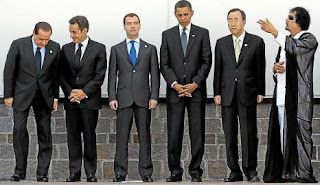
I think not. Though sometimes a picture is worth quite a lot of words. Like this one:

By my count, it is worth 179 words.
You'll have to swing by Burrowers, Books & (today more than ever) Balderdash to find out which words.
Tuesday, February 22, 2011
On chocolate. And then some.
I took on quite the research project for today's "Topical Tuesday" post over at Burrowers, Books & Balderdash. It started out as a new perspective on Valentine's Day (as if we didn't have enough of that last week, right..?), inspired by my surprise at the Japanese version of the Western holiday (they do so love to adopt holidays over here). But then I discovered a whole new story within the story, which led me to read up on African politics, specifically that of the Ivory Coast (or Côte d'Ivoire, as I've now learned it's supposed to be - though I am not sure why the French name reminding them of the colonial past is better than the English version meaning the exact same thing..).
As usual, you'll have to go over there to read the full post. This is just a teaser, and an outlet for all the things I didn't manage to fit into the post at BB&B. For instance the demoralizing statistics on fair-trade chocolate versus definitely-not-fair-at-all-trade chocolate (the fair-trade one only accounted for about 1% of the market share in 2005, the most recent number I could find). The latter often uses child labour, many of which are the victims of human trafficking and slavery.
As if this was not enough, cocoa production also contributes to deforestation, as the coca trees often compete with rain forests for space. The cocoa tree itself is also a fragile plant, which holds an important part in the ecosystem. With deforestation, the cocoa tree is endangered too, and farmers will constantly need to chop down new areas of forest to plant new cocoa trees. Thus it is a vicious cycle.
All this reading made me want to stop eating chocolate and go hug a tree (if it hadn't been for the fact that I once heard that trees were actually hurt by hugging...). Instead I wrote a blog post (or two, actually, since this one probably also counts with all its depressing facts) about it - so maybe you can find the inspiration to stop eating chocolate and (not) hug a tree.
No. I'm not pointing any proverbial fingers (not even the middle one, though the cruelty in cocoa production does seem to warrant it). I bought a packet of chocolate myself today (though in my defense, it was before all the researching took place...), and there isn't as much as a hint of any fair-trade emblems or rain forest frogs on it. Thus I am pretty sure I would be tossing cocoa beans in a glass house...
We should all be buying only fair-trade. We should all recycle, and while we're at it, we should floss our teeth and make our bed every morning. It is when I realize I fail on most of the above I wonder if I'm a faux idealist - if I am not willing to change myself, then how can I expect the world to change?
If you want to read more, I found this pretty cool blog - The Frog Blog - which is where the Rainforest Alliance shares info about new initiatives. One of them, the REDD+ is a UN programme to reduce emissions in developing countries by providing a financial initiative (so there is environment and development). As for fair-trade, you find lots of useful info on both the Fairtrade International and World Fair Trade Organization. For instance, you can here see lists of products that are fair-trade, so that the next time you go chocolate shopping, you have a choice.
As usual, you'll have to go over there to read the full post. This is just a teaser, and an outlet for all the things I didn't manage to fit into the post at BB&B. For instance the demoralizing statistics on fair-trade chocolate versus definitely-not-fair-at-all-trade chocolate (the fair-trade one only accounted for about 1% of the market share in 2005, the most recent number I could find). The latter often uses child labour, many of which are the victims of human trafficking and slavery.
As if this was not enough, cocoa production also contributes to deforestation, as the coca trees often compete with rain forests for space. The cocoa tree itself is also a fragile plant, which holds an important part in the ecosystem. With deforestation, the cocoa tree is endangered too, and farmers will constantly need to chop down new areas of forest to plant new cocoa trees. Thus it is a vicious cycle.
All this reading made me want to stop eating chocolate and go hug a tree (if it hadn't been for the fact that I once heard that trees were actually hurt by hugging...). Instead I wrote a blog post (or two, actually, since this one probably also counts with all its depressing facts) about it - so maybe you can find the inspiration to stop eating chocolate and (not) hug a tree.
No. I'm not pointing any proverbial fingers (not even the middle one, though the cruelty in cocoa production does seem to warrant it). I bought a packet of chocolate myself today (though in my defense, it was before all the researching took place...), and there isn't as much as a hint of any fair-trade emblems or rain forest frogs on it. Thus I am pretty sure I would be tossing cocoa beans in a glass house...
We should all be buying only fair-trade. We should all recycle, and while we're at it, we should floss our teeth and make our bed every morning. It is when I realize I fail on most of the above I wonder if I'm a faux idealist - if I am not willing to change myself, then how can I expect the world to change?
 |
| At least I can advertise. Buy fair-trade! |
 |
| And if you see this little guy on your products, you can be sure it didn't kill any trees. |
If you want to read more, I found this pretty cool blog - The Frog Blog - which is where the Rainforest Alliance shares info about new initiatives. One of them, the REDD+ is a UN programme to reduce emissions in developing countries by providing a financial initiative (so there is environment and development). As for fair-trade, you find lots of useful info on both the Fairtrade International and World Fair Trade Organization. For instance, you can here see lists of products that are fair-trade, so that the next time you go chocolate shopping, you have a choice.
Wednesday, April 14, 2010
On girafă*
I have earlier blogged about how Romanian accordion players have become something of a sign of spring in Oslo. They are everywhere. While my previous post focused on the charming element of this; there is a much more serious side of this story. This is the heart-wrenching part of it.
Most mornings I take the tram to the university. Oslo still has a number of street cars (in addition to the subway and buses) taking you across the (extended) city centre relatively efficiently. In my case, the tram ride takes longer than the subway, but it saves me from a more crowded commute and a longish walk in the morning when I usually am in a hurry. The tram also is crowded, but less so.
About a month or so ago I noticed a new trend on my morning tram ride. Three or four people unmistakably recognizable as Romanian accordion players and/or beggars were on the tram. Just like anyone else going to work, they were taking the tram. Only most people’s work doesn’t consist of standing outside (in still relatively cold weather) for twelve hours a day, hoping to earn a few coins from passing strangers.
The Romanians are easily recognized. The way they look and dress, for one thing, and the accordion many of them are carrying distinguishes them from most commuters. In addition I noticed one other thing on the tram – they carried the unmistakable smell of people who are living outdoors. These were human beings who hadn’t had the opportunity to take a shower or change their clothes for weeks. As I realized this, I pitied them, but there was nothing I could do about it, so it quickly escaped my mind when they left for work at their preferred locations downtown.
A few days later, however, I thought about them again when I read a news story in the paper. 41 Romanians had been evicted from a tiny apartment not far away from where I live, due to unsanitary conditions and for fire precaution reasons. The images from the apartment were disturbing to say the least. The mere idea that people had been living in what looked like a dump where food, garbage and excrements were floating, was shocking. The fact that they were so many in that tiny space, and that several of them had been seriously ill, made it all the worse. What perhaps made it especially close for me, however, was that the next morning, and every morning afterwards, the Romanians on the tram have been gone. It’s an easy conclusion to draw – the ones evicted were “my” Romanians.
I’m all for a liberal immigration policy. Partly because I realize that from a strictly economic perspective Norway is a country that without immigration would be in shortage of labour. From a socioeconomic perspective I also recognize the value the work and presence of these immigrants add to our society. Taking this into account, the challenge lies in having a solid integration policy, not in having a restricted immigration policy.
However, there are two problems with the current flow of people coming from Romania (and some other East European countries – but the Romanians make a reasonable example and a considerable portion of the group of people in question). First of all, they are not creating any values. They are not working, and thus they are not paying taxes. They are not buying anything here either, so from a strictly economic point of view, they are not adding to the creation of economic values. However, they are not creating any non-economic values either, seeing as they don’t intermingle with others.
Secondly, they are not immigrants. They have no intention of staying in Norway. They are here to make money, and the little money they make, they take back with them to Romania. What they are doing is taking economic values with them, and they are not making up for it by leaving anything (economic or otherwise) behind.
Even from a humanitarian point of view, however, I do not know if I think it is such a good idea for them to come here in a desperate search for money. I cannot even imagine what conditions they must be living under at home if they really see the alternative of living like animals crowded together in a foreign country is a price worth paying.
I got into a discussion a while back with a couple of friends. We all agreed that the situation for the Romanians in Oslo is awful and intolerable. We were not able to come up with an easy solution, though. My friends all argued that they felt terrible every time they passed one of the beggars without giving them anything. Personally, I have quite a firm principle when it comes to beggars. I almost never give anything, both because I rarely carry cash, but more importantly because I know that there are alternative ways for them to earn an income in Norway. No one has to beg on the streets here, and if they do, it’s often because they do not want to succumb to the institutions available. Obviously, this image is not always as black-white as I claim here, but that is the basic situation.
With the Romanians, however, the circumstances are completely different. They are not Norwegian citizens, and thus they don’t qualify for these institutions. And yet the Norwegian beggar who is openly going to use the money he receives on drugs, gets more than the obviously poor Romanian women holding their cups up to passers-by.
I still do not believe giving them my spare change will make any lasting difference. To me, it seems apparent that what needs to be changed is the system. Ideally, the system that should be changed is the one that is clearly not functioning well back in Romania. They should not have to come here and live under such inhuman conditions. As my friends pointed out, however, there isn’t much hope for a system change in Romania. So for us to wish that the Romanians leave and hope for the best back home, is not really a viable solution.
Apart from the guilty conscience they give us – are the Romanians really a problem here? Are they an actual burden to our admittedly well-fed society, or can we allow ourselves to let them stay if they believe this life is better than the one they were leading where they came from?
This is a difficult question. Many of them probably do no harm at all. I stand by my basic view that no one should have to live like this in Norway in 2010, but if they perceive themselves as better off here, who am I to judge? Well, there is an added problem that probably does not apply to all of them, but certainly to some. There have been raids of muggings and thefts that have been associated with the accordion players and the beggars. It appears that they operate in groups, where some of them are performing legit or semi-legit activities (it is technically legal to beg in Norway since the abolishment of the løsgjengerloven [“the drifter bill”, roughly translated] in 2006), while others are doing definite illegal ones. As it stands, it appears they have nothing to lose. If they avoid getting caught, they can return to their country with whatever values they have gained. If they are getting caught, they are put into Norwegian prisons, which, frankly, probably are far better than whatever lodging they have so far had in Norway.
As far as I can tell, there are indications but no firm evidence that the Romanians are organized – that the beggars and accordion players are working together with criminals who are raiding stores and private homes. Fortunately, one right that still applies to the Romanians (because it is a universal human right rather than one depending on the colour of your passport) is innocence until the opposite is proven.
Whether or not they are organized, however, (as another one of my friends pointed out) – they still need our help. Regardless of this, the partly documented and highly speculative indication that Romanians and other similar groups are responsible for a large share of crime in Oslo and Norway in general triggers xenophobia. Obviously, not all of the beggars and accordion players are criminals. But it is difficult if not impossible for the average Norwegian to distinguish the criminals from the rest, and this further diminishes the Romanians’ chances of succeeding with their legal efforts here.
In a way, the different attitudes towards the Romanians remind me of Victor Hugo’s famed Les Misérables. On the one hand, you have those who want to help no matter what – like the bishop who gives Jean Valjean food and shelter, and then dons Valjean two silver chandeliers stolen from the bishop as a way of getting Valjean out of trouble. On the other hand, you have the Javerts. The crazed police officer does everything possible to hunt down what he believes is a criminal. Neither the bishop or Javert takes the whole situation into account. Javert refuses to acknowledge that Valjean’s only crime was to steal because he wanted to feed a starving child. The bishop chooses to ignore Valjean’s criminal streak because he believes in the good within every human. While I would much rather be the bishop than Javert, I feel there is a middle road lacking. Someone who does recognize the fact that Valjean is a criminal (not so much for his original sin, but for the one he commits when stealing the chandeliers from his benefactor), but at the same time keeps in mind what caused him to commit the crime. And to me, the end result should be, rather than helping the individual and hope for the best (because sadly, not everyone would do like Valjean and turn his life around because of one act of kindness), removal of the cause of the collective problem. Valjean shouldn’t have been put in a position where he was forced to steal in the first place. The Romanians in Norway should not have to beg or steal or even play the accordion. They should have jobs, and some genuine prospects.
In the meantime there are now at least 41 Romanians who no longer have a home, but who nevertheless probably still live somewhere in Oslo, hoping to earn those few kroner each day so that they might have a slightly better life when they return home come autumn. It is heartbreakingly sad, but I really do not know what can be done.
~~~~~~~~~~~~~~~~~~
* Girafă means giraffe (no surprises there) in Romanian. Romanian being a romance language (”romance” as in the language category, not as in ”Lady and the Tramp meatball puffing”) isn’t a language I normally would have chosen to title a giraffy blog (since languages within the same linguistic group often have similar sounding words for obsolete things such as giraffes, and this normally wouldn't have been exotic enough for me to chose). However, with the topic of the blog it seemed to fit. Sadly.
It might have been more appropriate for this post to use the Romani word for giraffe instead of the Romanian one. In Norway the media almost consequently uses the term “Romanians” to denominate the people I have spoken of in this post, and I have chosen to do so too. Even though many of them are Romanian citizens, they are Romani people, gypsies (or so I have been told). While certain people in Norway have used this as an excuse to distinguish this group from other Romanians, in reality this is just another way of discriminating gypsies. The relevance of making this distinction, however, could be that we know gypsies are already shunned many places, and it makes the argument that they are not living good lives elsewhere more valid. But apart from that, I don’t see the relevance of distinguishing them from other Romanians, so I have avoided doing so.
However, Wikipedia failed to teach me what a gypsy would call a giraffe. I could not find a Romani page for giraffe (which has been my way of finding exotic giraffe names). Whether this means that the Romani aren’t all that into giraffes or if it has some other explanation, I cannot say.
Also, this post has taken me a looooong time to write (and it is looooong as well – sorry about that). It is a touchy topic, with a number of potential traps to fall into. I didn’t wish to offend anyone, so I weighed each word carefully. I didn’t wish to simplify the problem, so I have read countless newspaper articles, public police reports, and other research material that I was able to get a hold of. Most of all, I did wish to do justice to this subject, paticularly because I feel a lack of justice this has often been part of the problem. Regardless of what the Romanians in Oslo has or has not done, they are still human beings, but they are not treated as such. It breaks my heart to see this happening, every day, in a country that supposedly is the world’s best place to live.
Most mornings I take the tram to the university. Oslo still has a number of street cars (in addition to the subway and buses) taking you across the (extended) city centre relatively efficiently. In my case, the tram ride takes longer than the subway, but it saves me from a more crowded commute and a longish walk in the morning when I usually am in a hurry. The tram also is crowded, but less so.
About a month or so ago I noticed a new trend on my morning tram ride. Three or four people unmistakably recognizable as Romanian accordion players and/or beggars were on the tram. Just like anyone else going to work, they were taking the tram. Only most people’s work doesn’t consist of standing outside (in still relatively cold weather) for twelve hours a day, hoping to earn a few coins from passing strangers.
The Romanians are easily recognized. The way they look and dress, for one thing, and the accordion many of them are carrying distinguishes them from most commuters. In addition I noticed one other thing on the tram – they carried the unmistakable smell of people who are living outdoors. These were human beings who hadn’t had the opportunity to take a shower or change their clothes for weeks. As I realized this, I pitied them, but there was nothing I could do about it, so it quickly escaped my mind when they left for work at their preferred locations downtown.
A few days later, however, I thought about them again when I read a news story in the paper. 41 Romanians had been evicted from a tiny apartment not far away from where I live, due to unsanitary conditions and for fire precaution reasons. The images from the apartment were disturbing to say the least. The mere idea that people had been living in what looked like a dump where food, garbage and excrements were floating, was shocking. The fact that they were so many in that tiny space, and that several of them had been seriously ill, made it all the worse. What perhaps made it especially close for me, however, was that the next morning, and every morning afterwards, the Romanians on the tram have been gone. It’s an easy conclusion to draw – the ones evicted were “my” Romanians.
I’m all for a liberal immigration policy. Partly because I realize that from a strictly economic perspective Norway is a country that without immigration would be in shortage of labour. From a socioeconomic perspective I also recognize the value the work and presence of these immigrants add to our society. Taking this into account, the challenge lies in having a solid integration policy, not in having a restricted immigration policy.
However, there are two problems with the current flow of people coming from Romania (and some other East European countries – but the Romanians make a reasonable example and a considerable portion of the group of people in question). First of all, they are not creating any values. They are not working, and thus they are not paying taxes. They are not buying anything here either, so from a strictly economic point of view, they are not adding to the creation of economic values. However, they are not creating any non-economic values either, seeing as they don’t intermingle with others.
Secondly, they are not immigrants. They have no intention of staying in Norway. They are here to make money, and the little money they make, they take back with them to Romania. What they are doing is taking economic values with them, and they are not making up for it by leaving anything (economic or otherwise) behind.
Even from a humanitarian point of view, however, I do not know if I think it is such a good idea for them to come here in a desperate search for money. I cannot even imagine what conditions they must be living under at home if they really see the alternative of living like animals crowded together in a foreign country is a price worth paying.
I got into a discussion a while back with a couple of friends. We all agreed that the situation for the Romanians in Oslo is awful and intolerable. We were not able to come up with an easy solution, though. My friends all argued that they felt terrible every time they passed one of the beggars without giving them anything. Personally, I have quite a firm principle when it comes to beggars. I almost never give anything, both because I rarely carry cash, but more importantly because I know that there are alternative ways for them to earn an income in Norway. No one has to beg on the streets here, and if they do, it’s often because they do not want to succumb to the institutions available. Obviously, this image is not always as black-white as I claim here, but that is the basic situation.
With the Romanians, however, the circumstances are completely different. They are not Norwegian citizens, and thus they don’t qualify for these institutions. And yet the Norwegian beggar who is openly going to use the money he receives on drugs, gets more than the obviously poor Romanian women holding their cups up to passers-by.
I still do not believe giving them my spare change will make any lasting difference. To me, it seems apparent that what needs to be changed is the system. Ideally, the system that should be changed is the one that is clearly not functioning well back in Romania. They should not have to come here and live under such inhuman conditions. As my friends pointed out, however, there isn’t much hope for a system change in Romania. So for us to wish that the Romanians leave and hope for the best back home, is not really a viable solution.
Apart from the guilty conscience they give us – are the Romanians really a problem here? Are they an actual burden to our admittedly well-fed society, or can we allow ourselves to let them stay if they believe this life is better than the one they were leading where they came from?
This is a difficult question. Many of them probably do no harm at all. I stand by my basic view that no one should have to live like this in Norway in 2010, but if they perceive themselves as better off here, who am I to judge? Well, there is an added problem that probably does not apply to all of them, but certainly to some. There have been raids of muggings and thefts that have been associated with the accordion players and the beggars. It appears that they operate in groups, where some of them are performing legit or semi-legit activities (it is technically legal to beg in Norway since the abolishment of the løsgjengerloven [“the drifter bill”, roughly translated] in 2006), while others are doing definite illegal ones. As it stands, it appears they have nothing to lose. If they avoid getting caught, they can return to their country with whatever values they have gained. If they are getting caught, they are put into Norwegian prisons, which, frankly, probably are far better than whatever lodging they have so far had in Norway.
As far as I can tell, there are indications but no firm evidence that the Romanians are organized – that the beggars and accordion players are working together with criminals who are raiding stores and private homes. Fortunately, one right that still applies to the Romanians (because it is a universal human right rather than one depending on the colour of your passport) is innocence until the opposite is proven.
Whether or not they are organized, however, (as another one of my friends pointed out) – they still need our help. Regardless of this, the partly documented and highly speculative indication that Romanians and other similar groups are responsible for a large share of crime in Oslo and Norway in general triggers xenophobia. Obviously, not all of the beggars and accordion players are criminals. But it is difficult if not impossible for the average Norwegian to distinguish the criminals from the rest, and this further diminishes the Romanians’ chances of succeeding with their legal efforts here.
In a way, the different attitudes towards the Romanians remind me of Victor Hugo’s famed Les Misérables. On the one hand, you have those who want to help no matter what – like the bishop who gives Jean Valjean food and shelter, and then dons Valjean two silver chandeliers stolen from the bishop as a way of getting Valjean out of trouble. On the other hand, you have the Javerts. The crazed police officer does everything possible to hunt down what he believes is a criminal. Neither the bishop or Javert takes the whole situation into account. Javert refuses to acknowledge that Valjean’s only crime was to steal because he wanted to feed a starving child. The bishop chooses to ignore Valjean’s criminal streak because he believes in the good within every human. While I would much rather be the bishop than Javert, I feel there is a middle road lacking. Someone who does recognize the fact that Valjean is a criminal (not so much for his original sin, but for the one he commits when stealing the chandeliers from his benefactor), but at the same time keeps in mind what caused him to commit the crime. And to me, the end result should be, rather than helping the individual and hope for the best (because sadly, not everyone would do like Valjean and turn his life around because of one act of kindness), removal of the cause of the collective problem. Valjean shouldn’t have been put in a position where he was forced to steal in the first place. The Romanians in Norway should not have to beg or steal or even play the accordion. They should have jobs, and some genuine prospects.
In the meantime there are now at least 41 Romanians who no longer have a home, but who nevertheless probably still live somewhere in Oslo, hoping to earn those few kroner each day so that they might have a slightly better life when they return home come autumn. It is heartbreakingly sad, but I really do not know what can be done.
~~~~~~~~~~~~~~~~~~
* Girafă means giraffe (no surprises there) in Romanian. Romanian being a romance language (”romance” as in the language category, not as in ”Lady and the Tramp meatball puffing”) isn’t a language I normally would have chosen to title a giraffy blog (since languages within the same linguistic group often have similar sounding words for obsolete things such as giraffes, and this normally wouldn't have been exotic enough for me to chose). However, with the topic of the blog it seemed to fit. Sadly.
It might have been more appropriate for this post to use the Romani word for giraffe instead of the Romanian one. In Norway the media almost consequently uses the term “Romanians” to denominate the people I have spoken of in this post, and I have chosen to do so too. Even though many of them are Romanian citizens, they are Romani people, gypsies (or so I have been told). While certain people in Norway have used this as an excuse to distinguish this group from other Romanians, in reality this is just another way of discriminating gypsies. The relevance of making this distinction, however, could be that we know gypsies are already shunned many places, and it makes the argument that they are not living good lives elsewhere more valid. But apart from that, I don’t see the relevance of distinguishing them from other Romanians, so I have avoided doing so.
However, Wikipedia failed to teach me what a gypsy would call a giraffe. I could not find a Romani page for giraffe (which has been my way of finding exotic giraffe names). Whether this means that the Romani aren’t all that into giraffes or if it has some other explanation, I cannot say.
Also, this post has taken me a looooong time to write (and it is looooong as well – sorry about that). It is a touchy topic, with a number of potential traps to fall into. I didn’t wish to offend anyone, so I weighed each word carefully. I didn’t wish to simplify the problem, so I have read countless newspaper articles, public police reports, and other research material that I was able to get a hold of. Most of all, I did wish to do justice to this subject, paticularly because I feel a lack of justice this has often been part of the problem. Regardless of what the Romanians in Oslo has or has not done, they are still human beings, but they are not treated as such. It breaks my heart to see this happening, every day, in a country that supposedly is the world’s best place to live.
Monday, March 29, 2010
On Tn̂g-ām-lo̍k*
If you had a giraffe
and he stretched another half…
you would have a giraffe and a half
Shel Silverstein
It’s all about stretching another half, isn’t it?
~~~~~~~~~~~~~~~~~~~~~~~~~~~~~~~~~~~~~~~~~~~~~~~~~~~~~
* Tn̂g-ām-lo̍k is the Min Nan (or Bân-lâm-gú) word for giraffe. I bet most of you haven’t heard of the Min Nan language (at least I hadn’t). From what Wikipedia can tell me, it’s actually a family of Chinese languages and dialects spoken in Fujian and neighbouring areas. I didn’t know where that was, but once again Wikipedia was helpful. Fujian is a province on the Southeast coast of China, right across the Taiwan strait from, exactly, Taiwan. Min Nan usually refers to the Hokkien, which is a dialect, and in particular the Amoy and Taiwanese. The language spoken by 70% of Taiwanese population is a dialect of Min Nan. I think…
I find myself writing this, pretending that I understand it, but in reality, the only parts of the above sentences that broke through my dumb shield were the words “China” and “Taiwan”.
The university I went to in Japan prided itself with the word “International” in its name. There really were a lot of international students attending (though mostly from the privileged part of the world, but that is another story). We represented different countries with different cultures and it was fascinating to have such a unique opportunity to hang out with people from around the globe. I loved being able to tell my friends at home that I had just had lunch with a Japanese, a Singaporean, a Mongolian, a German, a Swede and a couple of Americans. That one semester in Japan made me very aware of the opportunities we have, living in a global world. Trade, commerce and business is one thing, but much more interesting to me is cooperation, exchange of ideas and knowledge, respect and admiration for foreign cultures. I took a class about Korea, but I think I learned almost as much from having lunch one day with one of the (South) Korean boys who told me about everyday life in his home country.
Unfortunately, the international stage isn’t all about peace and understanding. Sadly, our own mini-international stage reflected this. While I was there, we had eight Taiwanese girls, and three Chinese students. The Taiwanese girls were all very social, their English was near-perfect (as was their Japanese, I was told), they were friendly and eager to get to know new people. The three Chinese students kept to themselves, they spoke very little English (which is interesting, seeing as English was the language all classes were taught in), and they did not seem all that interested in participating in any social activities.
Two months into the semester, the school festival was scheduled. The entire university was given a polish to present a perfect façade. Among the many decorations put up were flags representing all the international students’ countries. This included the People’s Republic of China’s red flag with the yellow stars, and it included the flag of the Republic of China, Taiwan.
It doesn’t take a historian to know that this is slightly complicated, but in case your Chinese history is a little rusty, let me elaborate. In 1927 there was a civil war in China, fought between Nationalists and Communists. The war was interrupted by the Japanese invasion in 1937, but resumed once World War Two was over. The Communists eventually controlled the entire mainland China, and they established the People’s Republic of China (PRC) in 1949. The PRC considers itself as the successor state to the Republic of China (ROC), but the ROC continues to exist on the island of Taiwan. Seeing as this happened during the Cold War, it was not politically acceptable to the Western nations to recognize PRC. Thus, for a long time ROC remained the China officially recognized by most of the world. The small island even had a permanent place in the United Nations Security Council until 1971. After this PRC (or “Red China” as it is referred to in the sources for my thesis; a term I – wisely, I think – avoid in my actual thesis) gradually was recognized by more and more countries, and it is what we today know as China.
You all probably knew this… Sorry, I had a “historian moment”…
Anyway. China (PRC) still claims Taiwan as part of its territory (and until recently, Taiwan also claimed mainland China as part of their territory, but this seems slightly less realistic, somehow…). The world community is not exactly condoning this, but there aren’t any attempts to solidify Taiwan’s status either. There exists a sort of tacit agreement to unofficially treat Taiwan as an independent state, but very few states have actual diplomatic relations with Taiwan (which is the measuring cup for whether a state is recognized or not, which in turn is what determined whether it is a state. Which in essence is my bachelor degree, slightly simplified).
In our cozy, little university, these world events took a dramatic turn. Because the Chinese students who had been taught their entire life about how Taiwan had been the “bad guy” in the civil war; who only knew Taiwan as a bogus state opposing their own country; who like their country’s official policy did not recognize Taiwan as a state at all – these students were provoked by the Taiwanese flag. I did not witness the incident, but rumours and gossip travels like fire in dry grass in a small community like that. Apparently some harsh words were exchanged, and the Taiwanese flag was ripped down from the wall. The mood was fairly sour for a while, but as far as I know it never came to any further confrontations.
The implication, however, of the fact that international affairs could have such a direct influence over how people treated each other on an individual level, struck me. I am something of an idealist in many ways, and I have always hoped and believed that many wars and conflicts could be avoided if people were given the chance of meeting face to face. That way, I reasoned, they would realize that they were only dealing with people, and not a faceless enemy. Instead, in this case, it was the other way around. Putting these people in a small community only personified the enemy.
Ironically (considering the international climate), the sympathy from the other students mostly went to the Taiwanese students. First of all, they had been the “victims”. Secondly, they were our friends, while we hardly knew the Chinese students. Since this did not become an actual problem, however, no one was forced to take a stand.
Early in this post I mentioned that I learned a lot about Korea from speaking to a Korean boy over lunch one day. What I didn’t mention was what he told me (I was saving it for dramatic effect). We touched upon many subjects, but one of the things we talked about was how he had been taught all life that the North Koreans were monsters. Growing up in South Korea before the “Sunshine Policy” of the 1990s (here I could give you another lecture, but let’s leave it at “google Kim Dae-jung if you’re interested”), this was the harsh reality. “No wonder there is war in the world!” I thought to myself.
He further elaborated, though, that once he grew older he met some real, live North Koreans. Then he discovered that the truth was much more complex. This is what I hoped would happen with the Chinese and Taiwanese students, and perhaps more generally between the Chinese students and the rest of us. Personally, I never got to know them that well. Language problems was an issue, but if there is something my two visits to Japan have taught me, it is that communication does not always depend on the ability of speaking the same language. I admit that I did not go the extra yard to try to get to know the Chinese students. In retrospect, I wish I had. I can only hope they warmed up a little to the other students (and vice versa) after I left.
While the China/Taiwan incident was something of a setback for my idealist philosophy, my Korean encounter was much more promising. I still believe that learning about other cultures, gaining new perspectives and befriending someone you thought was an enemy is the key to peaceful settlement of many conflicts. If anything, the China/Taiwan incident proved this, because they didn’t do any of those things – they were placed together without getting to know one another.
So my faith in cultural exchange and personal relationships as a means of reducing conflict is restored, but with one important restriction: make sure that the conditions are right. (Perhaps you’ll have to stretch another half)
and he stretched another half…
you would have a giraffe and a half
Shel Silverstein
It’s all about stretching another half, isn’t it?
~~~~~~~~~~~~~~~~~~~~~~~~~~~~~~~~~~~~~~~~~~~~~~~~~~~~~
* Tn̂g-ām-lo̍k is the Min Nan (or Bân-lâm-gú) word for giraffe. I bet most of you haven’t heard of the Min Nan language (at least I hadn’t). From what Wikipedia can tell me, it’s actually a family of Chinese languages and dialects spoken in Fujian and neighbouring areas. I didn’t know where that was, but once again Wikipedia was helpful. Fujian is a province on the Southeast coast of China, right across the Taiwan strait from, exactly, Taiwan. Min Nan usually refers to the Hokkien, which is a dialect, and in particular the Amoy and Taiwanese. The language spoken by 70% of Taiwanese population is a dialect of Min Nan. I think…
I find myself writing this, pretending that I understand it, but in reality, the only parts of the above sentences that broke through my dumb shield were the words “China” and “Taiwan”.
The university I went to in Japan prided itself with the word “International” in its name. There really were a lot of international students attending (though mostly from the privileged part of the world, but that is another story). We represented different countries with different cultures and it was fascinating to have such a unique opportunity to hang out with people from around the globe. I loved being able to tell my friends at home that I had just had lunch with a Japanese, a Singaporean, a Mongolian, a German, a Swede and a couple of Americans. That one semester in Japan made me very aware of the opportunities we have, living in a global world. Trade, commerce and business is one thing, but much more interesting to me is cooperation, exchange of ideas and knowledge, respect and admiration for foreign cultures. I took a class about Korea, but I think I learned almost as much from having lunch one day with one of the (South) Korean boys who told me about everyday life in his home country.
Unfortunately, the international stage isn’t all about peace and understanding. Sadly, our own mini-international stage reflected this. While I was there, we had eight Taiwanese girls, and three Chinese students. The Taiwanese girls were all very social, their English was near-perfect (as was their Japanese, I was told), they were friendly and eager to get to know new people. The three Chinese students kept to themselves, they spoke very little English (which is interesting, seeing as English was the language all classes were taught in), and they did not seem all that interested in participating in any social activities.
Two months into the semester, the school festival was scheduled. The entire university was given a polish to present a perfect façade. Among the many decorations put up were flags representing all the international students’ countries. This included the People’s Republic of China’s red flag with the yellow stars, and it included the flag of the Republic of China, Taiwan.
It doesn’t take a historian to know that this is slightly complicated, but in case your Chinese history is a little rusty, let me elaborate. In 1927 there was a civil war in China, fought between Nationalists and Communists. The war was interrupted by the Japanese invasion in 1937, but resumed once World War Two was over. The Communists eventually controlled the entire mainland China, and they established the People’s Republic of China (PRC) in 1949. The PRC considers itself as the successor state to the Republic of China (ROC), but the ROC continues to exist on the island of Taiwan. Seeing as this happened during the Cold War, it was not politically acceptable to the Western nations to recognize PRC. Thus, for a long time ROC remained the China officially recognized by most of the world. The small island even had a permanent place in the United Nations Security Council until 1971. After this PRC (or “Red China” as it is referred to in the sources for my thesis; a term I – wisely, I think – avoid in my actual thesis) gradually was recognized by more and more countries, and it is what we today know as China.
You all probably knew this… Sorry, I had a “historian moment”…
Anyway. China (PRC) still claims Taiwan as part of its territory (and until recently, Taiwan also claimed mainland China as part of their territory, but this seems slightly less realistic, somehow…). The world community is not exactly condoning this, but there aren’t any attempts to solidify Taiwan’s status either. There exists a sort of tacit agreement to unofficially treat Taiwan as an independent state, but very few states have actual diplomatic relations with Taiwan (which is the measuring cup for whether a state is recognized or not, which in turn is what determined whether it is a state. Which in essence is my bachelor degree, slightly simplified).
In our cozy, little university, these world events took a dramatic turn. Because the Chinese students who had been taught their entire life about how Taiwan had been the “bad guy” in the civil war; who only knew Taiwan as a bogus state opposing their own country; who like their country’s official policy did not recognize Taiwan as a state at all – these students were provoked by the Taiwanese flag. I did not witness the incident, but rumours and gossip travels like fire in dry grass in a small community like that. Apparently some harsh words were exchanged, and the Taiwanese flag was ripped down from the wall. The mood was fairly sour for a while, but as far as I know it never came to any further confrontations.
The implication, however, of the fact that international affairs could have such a direct influence over how people treated each other on an individual level, struck me. I am something of an idealist in many ways, and I have always hoped and believed that many wars and conflicts could be avoided if people were given the chance of meeting face to face. That way, I reasoned, they would realize that they were only dealing with people, and not a faceless enemy. Instead, in this case, it was the other way around. Putting these people in a small community only personified the enemy.
Ironically (considering the international climate), the sympathy from the other students mostly went to the Taiwanese students. First of all, they had been the “victims”. Secondly, they were our friends, while we hardly knew the Chinese students. Since this did not become an actual problem, however, no one was forced to take a stand.
Early in this post I mentioned that I learned a lot about Korea from speaking to a Korean boy over lunch one day. What I didn’t mention was what he told me (I was saving it for dramatic effect). We touched upon many subjects, but one of the things we talked about was how he had been taught all life that the North Koreans were monsters. Growing up in South Korea before the “Sunshine Policy” of the 1990s (here I could give you another lecture, but let’s leave it at “google Kim Dae-jung if you’re interested”), this was the harsh reality. “No wonder there is war in the world!” I thought to myself.
He further elaborated, though, that once he grew older he met some real, live North Koreans. Then he discovered that the truth was much more complex. This is what I hoped would happen with the Chinese and Taiwanese students, and perhaps more generally between the Chinese students and the rest of us. Personally, I never got to know them that well. Language problems was an issue, but if there is something my two visits to Japan have taught me, it is that communication does not always depend on the ability of speaking the same language. I admit that I did not go the extra yard to try to get to know the Chinese students. In retrospect, I wish I had. I can only hope they warmed up a little to the other students (and vice versa) after I left.
While the China/Taiwan incident was something of a setback for my idealist philosophy, my Korean encounter was much more promising. I still believe that learning about other cultures, gaining new perspectives and befriending someone you thought was an enemy is the key to peaceful settlement of many conflicts. If anything, the China/Taiwan incident proved this, because they didn’t do any of those things – they were placed together without getting to know one another.
So my faith in cultural exchange and personal relationships as a means of reducing conflict is restored, but with one important restriction: make sure that the conditions are right. (Perhaps you’ll have to stretch another half)
Monday, October 19, 2009
On the President, the Peace Prize and precarious positions
For the most part I’ve tried to keep this blog nice and diplomatic. I tend to turn to humour instead of cannonballs (a technique I believe a number of world leaders, past and present, ought to adopt). However, there are times when I can’t help but ram the cannon, even if I know it’s a risky business. I have expressed my opinions on the Middle East conflict, for instance, although I limited this to show my concern for the fact that there is an ongoing conflict rather than expressing my sympathies (or lack thereof). I’ve also written a couple of pieces on the Nobel Peace Prize – one generic and one specifically concerning the most recent laureate.
When I do write something like this I don’t do it lightly. I have a bachelor’s degree in international studies. I am in the process of getting a master’s degree in history. I have specifically studied war and peace for years, and even if I hardly can claim to be an authority on the subject, I do believe that by now I have the right to say that at least I know when I know what I am talking about. Therefore it bothers me when people tell me I don’t.
Normally, I don’t like to target specific people or specific replies, because inside me somewhere there lives a little girl who simply wants everyone to like her and to get along with everybody. However, sometimes I am forced to tell this little girl that this is not how the real world works. Sometimes one needs to confront things to have a fruitful discussion, and there will always be someone disagreeing with you. This is okay – I don’t mind that others don’t share my opinions. What matters is the way it is done. Some of the replies to my previous post on President Obama’s peace prize I was fine with – the opinion that Obama did not (yet?) deserve the Nobel Peace Prize is a valid one, it’s even one I partly agree with. The opinion that the Nobel Prize has lost some of its credibility because of the committee’s recent decision might also be valid – at least as an opinion. Whether it is a historical fact remains to be seen. I am not inclined to think this is so, actually, since the history of the prize shows several equally (and more) controversial laureates. The case against this year’s decision is that it is political, and that Obama has not yet done anything to deserve it. Well, the prize has frequently been accused of being political, and its laureates have on several occasions been accused of deserving war prizes rather than peace ones. At least no one can say that about Obama (yet?). Accusations that he is an “evil communist” do not count in this respect, by the way, since a) he is not a communist (and I very much doubt he is evil); and b) even if he had been a communist, or even evil, that alone does not equate him being in favour of war rather than peace.
But back to the replies I received. My post spurred something of a debate on my Facebook-page of all things. Since I was away, I was not able to participate in the debate (that in true digressionary spirit derailed into a debate on U.S. healthcare reform and its funding). I don’t like jumping into a debate this late, but I do feel that some of the premises raised more than deserve my attention. Therefore I will step away from two of my principles – this post will be (already is, I believe) political, and in order to get my point across I will target specific replies (even though the little girl inside me is silently aching).
It is sad that people around the world think they know what is best for the U.S.
I don’t think I know what is best for the U.S. But I do think that when a country has rapidly increasing unemployment rates, when its economy is in deep crisis, and when there are growing numbers of people living in poverty, it is high time to try to solve the problems. So far, it appears that Obama is at least willing to try. I am not saying he will succeed, and I am not saying he won’t. But I do think it is a good thing that he is trying.
I say this leaning on my background from international relations and history (and international economy, I might add). If my own political convictions also come to play, this just means I am human. It does not mean I think I have the right to enforce my beliefs on the people of the United States. I respect the fact that there are people here who have different opinions than me. I also notice, however, that there are people who share my opinions – people who are tired of the fact that they have to work their backsides off and still only barely afford healthcare. This is actually more evident to me now, living in the U.S., than what it was before I came here. So to say that I, as a foreigner, has no idea what I am talking about is a grave underestimate of my education, my intelligence and my ability to observe my surroundings.
You and others around the world who think Obama is so great, didn't grow up in the kind of freedom we are used to
I’m not entirely sure whether this is supposed to offend me, or whether this too is an underestimate. I chose to believe the latter. See, I can’t quite understand what kind of freedom U.S. citizens supposedly have that Norwegians haven’t.
Let me clarify. Norway has been an independent country since 1905. Even while we were in union with Sweden, however, we had our own constitution (since 1814), which at the time was the most progressive one ever written (including the U.S. one). In the following century, Norwegians gradually gained more civil rights. By 1913, we had universal suffrage (Norway was the second country in the world to allow women the right to vote). Excluding the five years of Nazi occupation during World War Two, Norwegians has thus enjoyed incredible freedom for a long time. In fact, since our collective memory so vividly remembers what lack of freedom implies, many Norwegians are very aware of what kind of freedom we are fortunate enough to have today.
Further, citizens in Norway enjoy the freedom of speech, the right to assembly and other fundamental human rights now integrated in our constitution. I have never experienced that I could not express my own opinions (which is probably why it shocks me when I in this instance basically am told that I should not). I have always enjoyed great freedom – in fact, I am willing to claim greater freedom than what many Americans do, because unlike many of them, I have for instance been fortunate enough to be able to travel a lot. Seeing different parts of the world allows me to appreciate my own country, because I do see that there are disparity in terms of freedom and prosperity around the world. The United States is a great country, but let there be no doubt – it is not the only great country.
In terms of civil rights, as shown above we are right up there with the United States. When it comes to other types of freedom, I don’t see that we fall short there either. Norway has one of the highest per capita incomes in the world, and also one of the largest PPP (purchase power parity) per capita, both considerably higher than that of the U.S. – Norwegians enjoy far larger financial freedom than most people in the world. Norway this year ranks top at the United Nations’ Human Development Index, which measures level of education, life expectancy and GDP per capita. We have been number two for a couple of years now, but before that, we ranked top six years in a row. What this translates to is that the UN considers Norway “the best country to live in”. I’m not saying the UN list is exclusive – clearly there are other factors that determine how happy or free the citizens are, but it does appear that a high score on these three points constitute a good starting point.
Finally, I believe there is a common misunderstanding coming to play here – the assumed battle between “individual freedom” versus a “strong government”. In theory I have less individual freedom because I pay more taxes than an American, and because I cannot choose which health insurance I want, since I am automatically insuranced through the government rather than with a private company. I am willing to argue till my face turns blue the Norwegian welfare system actually gives me MORE individual freedom, because I still have the option of choosing a private clinic in Norway or abroad if I want to, an option that I actually might be able to afford because there are no insurance companies stealing my money (since I don’t have to pay for health insurance), and because I, despite the taxes I pay, am still left with more money at the end of the month due to all the other services my government also provides that I thus don’t have to pay for. I can, if I want to. But I don’t see the point – after all, the system is working. If anything, I pity those who didn’t grow up in the kind of freedom I am used to – a freedom that also allows you to trust your government.
American Freedom will never die and Socialism will not last.
Here it is again. The struggle between “American Freedom” (individual freedom) and “Socialism” (strong government). I believe that I under the previous point clarified why I don’t think this is a particularly fruitful debate. One further reason, however, is a matter of definition. You can find a number of definitions of socialism in various dictionaries, but let me provide one:
Transferring power to the government from the individual isn’t taking power from the people in a social-democratic system. This is where the democratic part comes to play. The government is elected by the people.
Social-democracy has been part of Norway’s backbone, alongside capitalism, since the end of World War Two. Yes, capitalism. Because we do have open markets (in some cases even more so than the U.S., because we are subject to EU rules even if we’re not a member). But this does not change the fact that we also have a strong government, deeply vested in the welfare state. Even when we have conservative or liberal governments, no one is trying to put an end to the welfare state, since this is the foundation for how our entire society is wired.
Likewise, Obama is not trying to change everything about the existing system in the United States. I don’t foresee a similar construction as the Norwegian welfare state forming in the U.S. I’m not even sure it is desirable, and it is probably not possible considering the mere size of the Unites States. What Obama is saying is that today there are a number of Americans that cannot afford proper healthcare, and this is not something a civilized society ought to tolerate. His proposal to get there is to have a government based alternative to ensure at least a minimum of security for everyone (and how do I know this? Because I have listened to what he says about the reform, I have read the reports and I pay attention to what is being said in the media. That is media in plural, yes).
Despite my welfare state upbringing, I happen to believe that the important part of Obama’s promise is “minimum for everyone”, not “government based”. If there can be other solutions more compatible with the current U.S. system – fine. Go for that. But rather than trying to find such solutions, the opposition largely seems to be doing their best to trash Obama’s proposal by labelling it “socialist” or “communist”, or even “evil”. Why they want to revoke fears that should have been buried with the Cold War axe instead of constructively cooperate, is beyond me, and this, more than political convictions, is why I am inclined to believe that Obama has a better case than the rest of them.
The healthcare plan will not make you poor. It will not make businesses go bankrupt. It will not turn the USA into a socialist as opposed to a capitalist country. If anything, Norway is an example that a middle way is indeed possible. I am not saying the Norwegian system is flawless, because it isn’t. Let me once again emphasize that I am also not saying that the U.S. should adopt Norway’s system. But I do think it is worth considering the proposed changes rather than dismissing them as “socialism”.
It [the fact that Obama won the Nobel Prize] just proves that the rest of the world wants us to be just like them.
Well, no. It doesn’t prove anything. First of all, the Nobel Peace Prize is not a “be like us or else” kind of prize. Secondly, it hardly reflects the opinion of the world. I think the six members of the Norwegian Nobel Committee would be rather flattered to hear such an accusation. Their decisions reflect their opinion, and nothing else. In this case the committee’s reasons for awarding Obama was “his extraordinary efforts to strengthen international diplomacy and cooperation between peoples”, his “vision of and work for a world without nuclear weapons” and for his initiatives in cooperation in such themes as human rights, democracy and climate challenges. Not once during the announcement was domestic, U.S. issues mentioned. If the members of the Nobel Committee also have an opinion on these matters, they do not mention it as a basis for their decisions. Since both the nominees and the records of the committee’s meetings are confidential and not to be released for at least 50 years, we will not know for a while yet whether the committee members had ulterior motifs. Therefore it is pointless to discuss it.
In the end, it does not matter whether we like or dislike the awarding of the Nobel Peace Prize to Obama. The decision has been made, and the Nobel committee never has, in its 108 year long history, changed its mind. The decision will stand. There has been disagreement within the committee (in 1973, when the prize was awarded to Henry Kissinger and Le Duc Tho, the North Vietnamese who is one of the few that has declined the prize, two of the committee’s dissenting members actually resigned), though this year’s decisions appears to have been unanimous. I’d like to quote Obama’s big sister, Auma Obama, who this weekend visited Norway in her capacity as working for CARE in Kenya. When asked what she thought about her brother’s reaction to the prize – that he felt he didn’t deserve it – she said that she did not think it was important whether he felt he deserved it. “It’s not up to you to decide whether you deserve something or not. When you get a prize you are given that prize. You are nominated. (…) We can’t define how those people feel about us.”
To conclude. If you think Obama didn’t deserve the prize, fine. It won’t change anything, but you’re entitled to that opinion. If you think Obama is an idiot who will ruin everything the United States was built upon, you’re entitled to that opinion. If you think Norway is a socialist state where the poor people have no idea how un-free they are, I suppose you are entitled to that opinion as well, although I do feel I have done an effort to enlighten you so that your opinion may be based on facts rather than assumptions. What I demand, though, is my right to express my opinions (especially considering this is MY blog). I don’t appreciate insinuations that I shouldn’t use this right, and I don’t appreciate insinuations that I don’t know what I talk about (for the record – no, I don’t believe everything I hear in the media. That includes Fox News, by the way).
I know I am putting my head on the chopping block with this post, but I feel it’s the right thing to do. And I apologize in advance if anyone feels offended by my doing so. Most of all I apologize that this got so long. If you managed to stay with me through the end – kudos to you for that!
When I do write something like this I don’t do it lightly. I have a bachelor’s degree in international studies. I am in the process of getting a master’s degree in history. I have specifically studied war and peace for years, and even if I hardly can claim to be an authority on the subject, I do believe that by now I have the right to say that at least I know when I know what I am talking about. Therefore it bothers me when people tell me I don’t.
Normally, I don’t like to target specific people or specific replies, because inside me somewhere there lives a little girl who simply wants everyone to like her and to get along with everybody. However, sometimes I am forced to tell this little girl that this is not how the real world works. Sometimes one needs to confront things to have a fruitful discussion, and there will always be someone disagreeing with you. This is okay – I don’t mind that others don’t share my opinions. What matters is the way it is done. Some of the replies to my previous post on President Obama’s peace prize I was fine with – the opinion that Obama did not (yet?) deserve the Nobel Peace Prize is a valid one, it’s even one I partly agree with. The opinion that the Nobel Prize has lost some of its credibility because of the committee’s recent decision might also be valid – at least as an opinion. Whether it is a historical fact remains to be seen. I am not inclined to think this is so, actually, since the history of the prize shows several equally (and more) controversial laureates. The case against this year’s decision is that it is political, and that Obama has not yet done anything to deserve it. Well, the prize has frequently been accused of being political, and its laureates have on several occasions been accused of deserving war prizes rather than peace ones. At least no one can say that about Obama (yet?). Accusations that he is an “evil communist” do not count in this respect, by the way, since a) he is not a communist (and I very much doubt he is evil); and b) even if he had been a communist, or even evil, that alone does not equate him being in favour of war rather than peace.
But back to the replies I received. My post spurred something of a debate on my Facebook-page of all things. Since I was away, I was not able to participate in the debate (that in true digressionary spirit derailed into a debate on U.S. healthcare reform and its funding). I don’t like jumping into a debate this late, but I do feel that some of the premises raised more than deserve my attention. Therefore I will step away from two of my principles – this post will be (already is, I believe) political, and in order to get my point across I will target specific replies (even though the little girl inside me is silently aching).
It is sad that people around the world think they know what is best for the U.S.
I don’t think I know what is best for the U.S. But I do think that when a country has rapidly increasing unemployment rates, when its economy is in deep crisis, and when there are growing numbers of people living in poverty, it is high time to try to solve the problems. So far, it appears that Obama is at least willing to try. I am not saying he will succeed, and I am not saying he won’t. But I do think it is a good thing that he is trying.
I say this leaning on my background from international relations and history (and international economy, I might add). If my own political convictions also come to play, this just means I am human. It does not mean I think I have the right to enforce my beliefs on the people of the United States. I respect the fact that there are people here who have different opinions than me. I also notice, however, that there are people who share my opinions – people who are tired of the fact that they have to work their backsides off and still only barely afford healthcare. This is actually more evident to me now, living in the U.S., than what it was before I came here. So to say that I, as a foreigner, has no idea what I am talking about is a grave underestimate of my education, my intelligence and my ability to observe my surroundings.
You and others around the world who think Obama is so great, didn't grow up in the kind of freedom we are used to
I’m not entirely sure whether this is supposed to offend me, or whether this too is an underestimate. I chose to believe the latter. See, I can’t quite understand what kind of freedom U.S. citizens supposedly have that Norwegians haven’t.
Let me clarify. Norway has been an independent country since 1905. Even while we were in union with Sweden, however, we had our own constitution (since 1814), which at the time was the most progressive one ever written (including the U.S. one). In the following century, Norwegians gradually gained more civil rights. By 1913, we had universal suffrage (Norway was the second country in the world to allow women the right to vote). Excluding the five years of Nazi occupation during World War Two, Norwegians has thus enjoyed incredible freedom for a long time. In fact, since our collective memory so vividly remembers what lack of freedom implies, many Norwegians are very aware of what kind of freedom we are fortunate enough to have today.
Further, citizens in Norway enjoy the freedom of speech, the right to assembly and other fundamental human rights now integrated in our constitution. I have never experienced that I could not express my own opinions (which is probably why it shocks me when I in this instance basically am told that I should not). I have always enjoyed great freedom – in fact, I am willing to claim greater freedom than what many Americans do, because unlike many of them, I have for instance been fortunate enough to be able to travel a lot. Seeing different parts of the world allows me to appreciate my own country, because I do see that there are disparity in terms of freedom and prosperity around the world. The United States is a great country, but let there be no doubt – it is not the only great country.
In terms of civil rights, as shown above we are right up there with the United States. When it comes to other types of freedom, I don’t see that we fall short there either. Norway has one of the highest per capita incomes in the world, and also one of the largest PPP (purchase power parity) per capita, both considerably higher than that of the U.S. – Norwegians enjoy far larger financial freedom than most people in the world. Norway this year ranks top at the United Nations’ Human Development Index, which measures level of education, life expectancy and GDP per capita. We have been number two for a couple of years now, but before that, we ranked top six years in a row. What this translates to is that the UN considers Norway “the best country to live in”. I’m not saying the UN list is exclusive – clearly there are other factors that determine how happy or free the citizens are, but it does appear that a high score on these three points constitute a good starting point.
Finally, I believe there is a common misunderstanding coming to play here – the assumed battle between “individual freedom” versus a “strong government”. In theory I have less individual freedom because I pay more taxes than an American, and because I cannot choose which health insurance I want, since I am automatically insuranced through the government rather than with a private company. I am willing to argue till my face turns blue the Norwegian welfare system actually gives me MORE individual freedom, because I still have the option of choosing a private clinic in Norway or abroad if I want to, an option that I actually might be able to afford because there are no insurance companies stealing my money (since I don’t have to pay for health insurance), and because I, despite the taxes I pay, am still left with more money at the end of the month due to all the other services my government also provides that I thus don’t have to pay for. I can, if I want to. But I don’t see the point – after all, the system is working. If anything, I pity those who didn’t grow up in the kind of freedom I am used to – a freedom that also allows you to trust your government.
American Freedom will never die and Socialism will not last.
Here it is again. The struggle between “American Freedom” (individual freedom) and “Socialism” (strong government). I believe that I under the previous point clarified why I don’t think this is a particularly fruitful debate. One further reason, however, is a matter of definition. You can find a number of definitions of socialism in various dictionaries, but let me provide one:
Socialism: Any of various theories or systems of social organization in which the means of producing and distributing goods is owned collectively or by a centralized government that often plans and controls the economy.Under this definition, or most others, Obama’s policies don’t warrant the label socialism. Neither does, actually, the Norwegian system. Norway is currently governed by a social-democratic government. I emphasize democratic, because even though it is evident to me that there is a difference between socialism in its purest form and the variety of ideologies or systems that include socialist elements, I realize it might not be as clear to everyone else.
Transferring power to the government from the individual isn’t taking power from the people in a social-democratic system. This is where the democratic part comes to play. The government is elected by the people.
Social-democracy has been part of Norway’s backbone, alongside capitalism, since the end of World War Two. Yes, capitalism. Because we do have open markets (in some cases even more so than the U.S., because we are subject to EU rules even if we’re not a member). But this does not change the fact that we also have a strong government, deeply vested in the welfare state. Even when we have conservative or liberal governments, no one is trying to put an end to the welfare state, since this is the foundation for how our entire society is wired.
Likewise, Obama is not trying to change everything about the existing system in the United States. I don’t foresee a similar construction as the Norwegian welfare state forming in the U.S. I’m not even sure it is desirable, and it is probably not possible considering the mere size of the Unites States. What Obama is saying is that today there are a number of Americans that cannot afford proper healthcare, and this is not something a civilized society ought to tolerate. His proposal to get there is to have a government based alternative to ensure at least a minimum of security for everyone (and how do I know this? Because I have listened to what he says about the reform, I have read the reports and I pay attention to what is being said in the media. That is media in plural, yes).
Despite my welfare state upbringing, I happen to believe that the important part of Obama’s promise is “minimum for everyone”, not “government based”. If there can be other solutions more compatible with the current U.S. system – fine. Go for that. But rather than trying to find such solutions, the opposition largely seems to be doing their best to trash Obama’s proposal by labelling it “socialist” or “communist”, or even “evil”. Why they want to revoke fears that should have been buried with the Cold War axe instead of constructively cooperate, is beyond me, and this, more than political convictions, is why I am inclined to believe that Obama has a better case than the rest of them.
The healthcare plan will not make you poor. It will not make businesses go bankrupt. It will not turn the USA into a socialist as opposed to a capitalist country. If anything, Norway is an example that a middle way is indeed possible. I am not saying the Norwegian system is flawless, because it isn’t. Let me once again emphasize that I am also not saying that the U.S. should adopt Norway’s system. But I do think it is worth considering the proposed changes rather than dismissing them as “socialism”.
It [the fact that Obama won the Nobel Prize] just proves that the rest of the world wants us to be just like them.
Well, no. It doesn’t prove anything. First of all, the Nobel Peace Prize is not a “be like us or else” kind of prize. Secondly, it hardly reflects the opinion of the world. I think the six members of the Norwegian Nobel Committee would be rather flattered to hear such an accusation. Their decisions reflect their opinion, and nothing else. In this case the committee’s reasons for awarding Obama was “his extraordinary efforts to strengthen international diplomacy and cooperation between peoples”, his “vision of and work for a world without nuclear weapons” and for his initiatives in cooperation in such themes as human rights, democracy and climate challenges. Not once during the announcement was domestic, U.S. issues mentioned. If the members of the Nobel Committee also have an opinion on these matters, they do not mention it as a basis for their decisions. Since both the nominees and the records of the committee’s meetings are confidential and not to be released for at least 50 years, we will not know for a while yet whether the committee members had ulterior motifs. Therefore it is pointless to discuss it.
In the end, it does not matter whether we like or dislike the awarding of the Nobel Peace Prize to Obama. The decision has been made, and the Nobel committee never has, in its 108 year long history, changed its mind. The decision will stand. There has been disagreement within the committee (in 1973, when the prize was awarded to Henry Kissinger and Le Duc Tho, the North Vietnamese who is one of the few that has declined the prize, two of the committee’s dissenting members actually resigned), though this year’s decisions appears to have been unanimous. I’d like to quote Obama’s big sister, Auma Obama, who this weekend visited Norway in her capacity as working for CARE in Kenya. When asked what she thought about her brother’s reaction to the prize – that he felt he didn’t deserve it – she said that she did not think it was important whether he felt he deserved it. “It’s not up to you to decide whether you deserve something or not. When you get a prize you are given that prize. You are nominated. (…) We can’t define how those people feel about us.”
To conclude. If you think Obama didn’t deserve the prize, fine. It won’t change anything, but you’re entitled to that opinion. If you think Obama is an idiot who will ruin everything the United States was built upon, you’re entitled to that opinion. If you think Norway is a socialist state where the poor people have no idea how un-free they are, I suppose you are entitled to that opinion as well, although I do feel I have done an effort to enlighten you so that your opinion may be based on facts rather than assumptions. What I demand, though, is my right to express my opinions (especially considering this is MY blog). I don’t appreciate insinuations that I shouldn’t use this right, and I don’t appreciate insinuations that I don’t know what I talk about (for the record – no, I don’t believe everything I hear in the media. That includes Fox News, by the way).
I know I am putting my head on the chopping block with this post, but I feel it’s the right thing to do. And I apologize in advance if anyone feels offended by my doing so. Most of all I apologize that this got so long. If you managed to stay with me through the end – kudos to you for that!
Subscribe to:
Posts (Atom)
